
Synthesizing complex checkout logic into a streamlined purchase journey
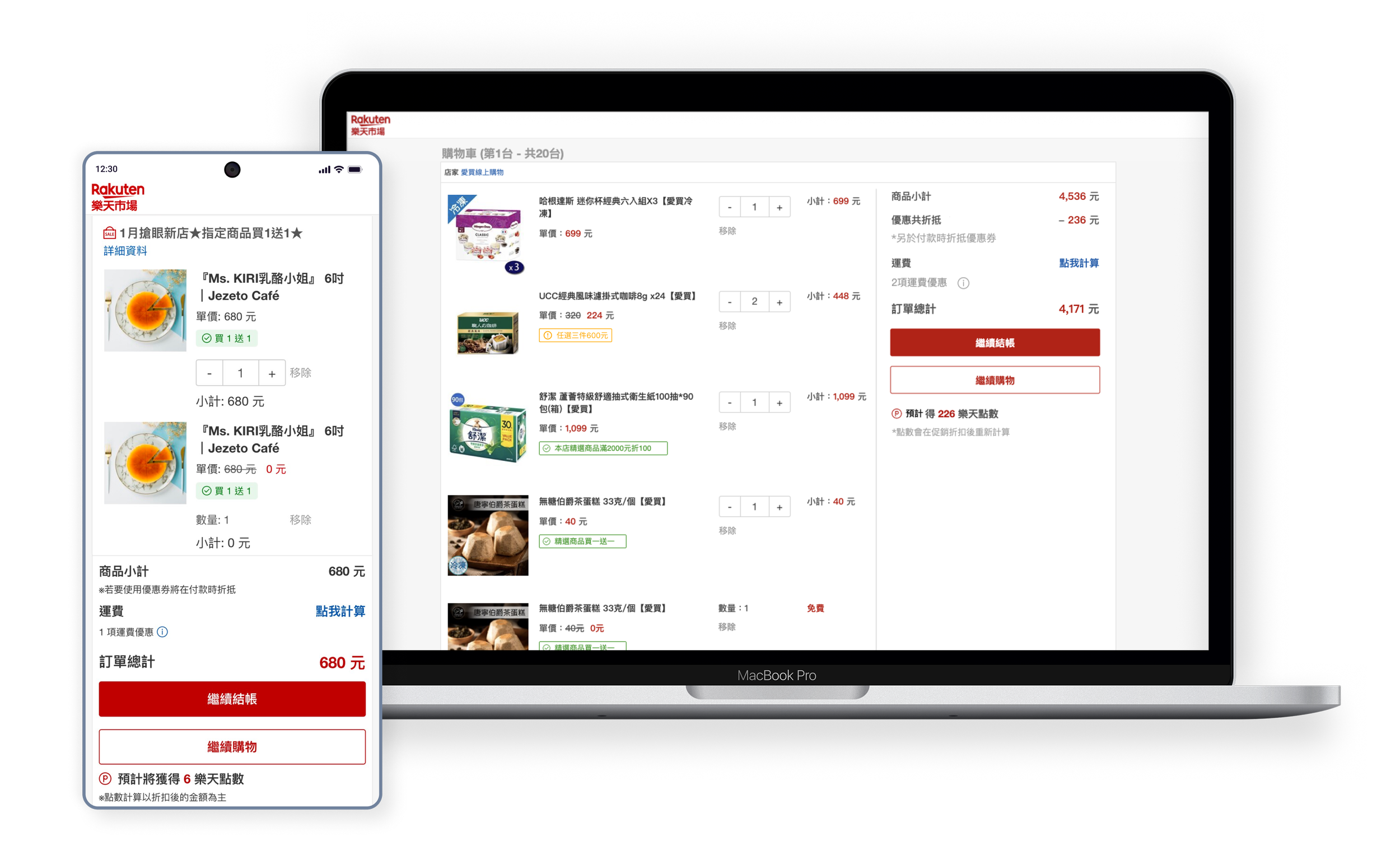
Overhauled the checkout process to integrate complex campaign rules, overwhelming shopping cart without friction, balancing business goals with a streamlined checkout journey.
152% increase in merchant campaign adoption and lifted GMS.
Company
Rakuten Taiwan introduces the unique B2B2C e-commerce business model to local market.
Team
UX team, Dev Team, PM, Business Department
Responsibility
Led the data-informed redesign of the checkout process as a sr. UX designer, leveraging behavioral tracking data and qualitative research to drive design strategy. Beyond execution, I served as a strategic partner in project planning, balancing commercial goals with a frictionless user journey.
Problem Statement
Shoppers keep products in the cart rather than place order. How to enhance checkout process becomes the major topic in Business Department's mind.
Challenge for Design Projects
Challenge One
As adding top AD banner was the requirement from business side but the top AD might distract users from the checkout page. Navigating the balance between business demands and user experience, I recommended featuring payment method-related promotions as an enticing addition to the checkout page, addressing both objectives effectively.
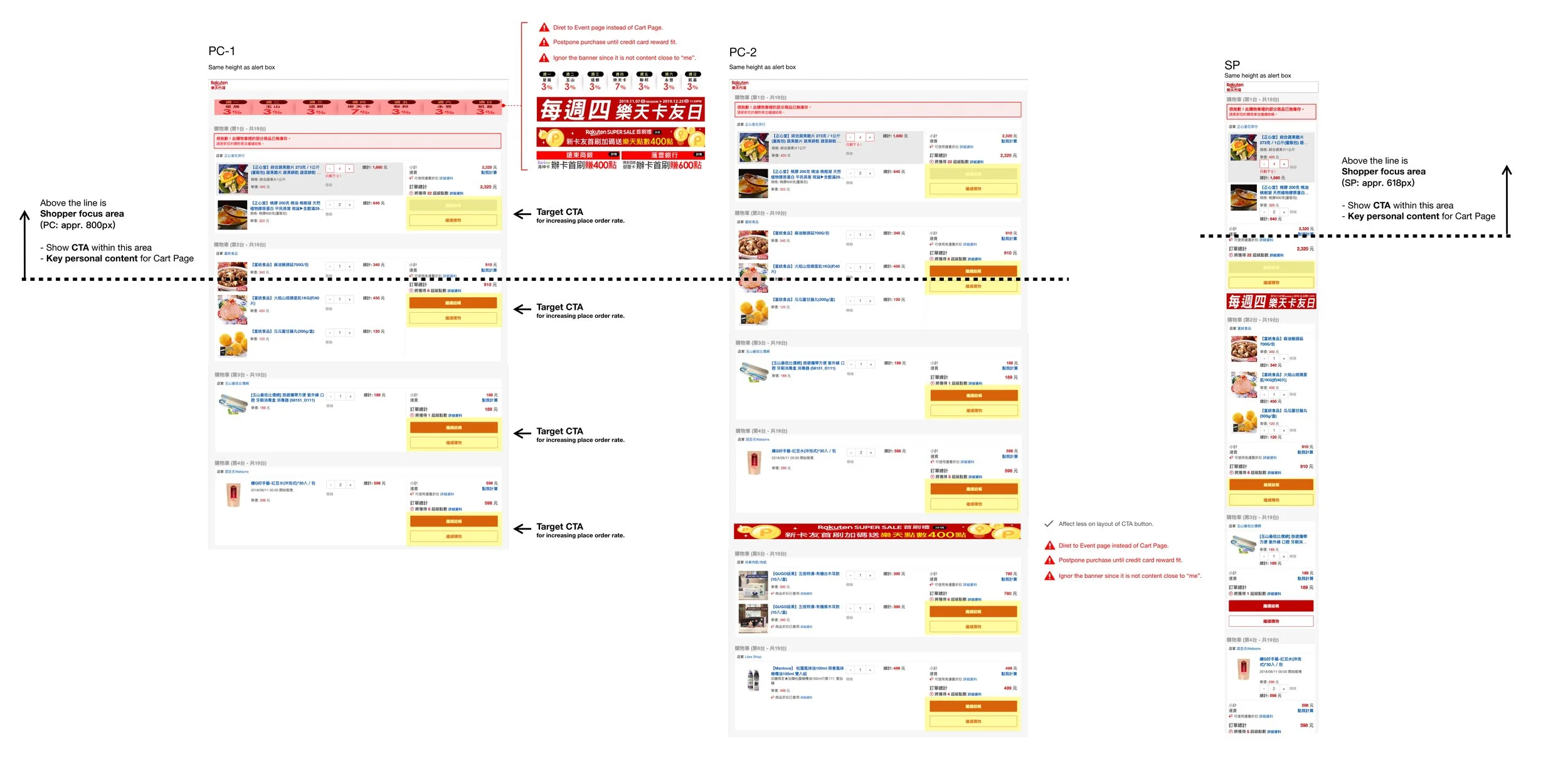
Potential risk analysis for the top AD banner. Challenge Two
Business department planed to add new combinations to existing campaign rules that confused our users already. Balancing the business goal of boosting GMS, I seized the opportunity to enhance the checkout experience. I not only aligned with the business requirement but also offered strategic input for project planning, optimizing the information display during checkout process and mitigating user confusion effectively.
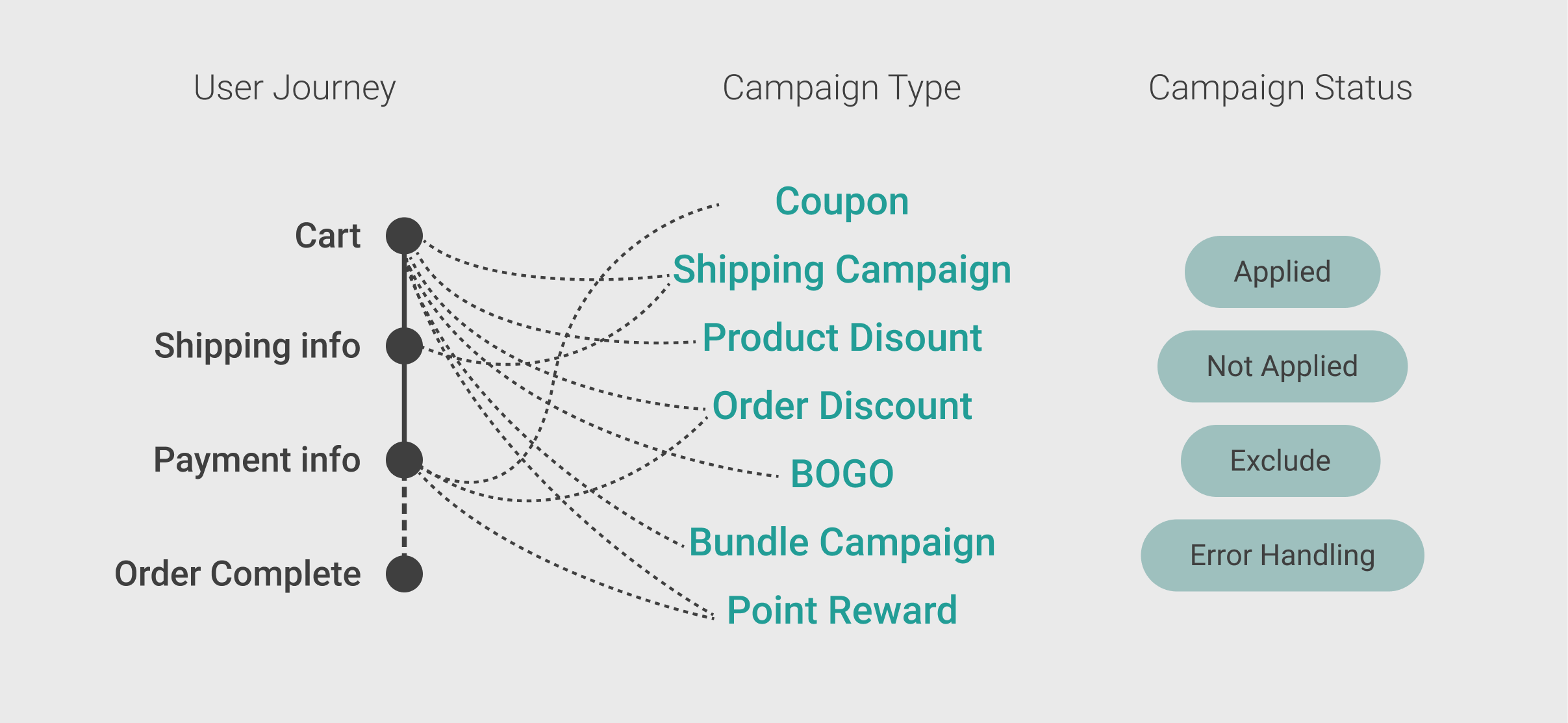
Mapping complex campaign logic to the user journey to resolve shopper confusion.How Might We Provide a Better Purchase Journey?
The qualitative data from user reports and quantitative data from analysis result, these data were consolidated into the fact and behavior insights of shoppers’ behavior. With these picture in mind, I used HMW question as initiation for further product planning. The direction for purchase journey enhancement with overview of product came in three aspects:
Enhance experience of Product Page - start point of purchase journey and trigger user to add product to shopping cart.
Enhance Shop section - data analytics reveals shoppers behavior of entering shop for more purchase to reach the order price for free shipping.
Simplify information over checkout process and assisting a better choice for purchase.
Since the project direction focused on Checkout process this time, there were two challenges came along with the requirements from business department.
Synthesis the Purchase Journey
To address Challenge Two, I secured stakeholder alignment on a checkout overhaul that balanced business objectives with user needs. By restructuring the Shopping Cart and Delivery pages, I established a clearer information hierarchy, effectively eliminating the cognitive load that hindered the original process.
User Insights and Painpoints
Base on the user painpoints from existing research report, I analysed the production UI to find out the reason that caused users confused: the overwhelming info to check on shopping cart and delivery page.
For shopping cart, users focus on four types of information before they decide to place order:
Product info (product name, quantity, price)
Discount info (campaign applied, shipping discount, coupons)
Extra fee (delivery fee)
Member point reward info
To organize the info within shopping cart and delivery page became the primary task for design solution.
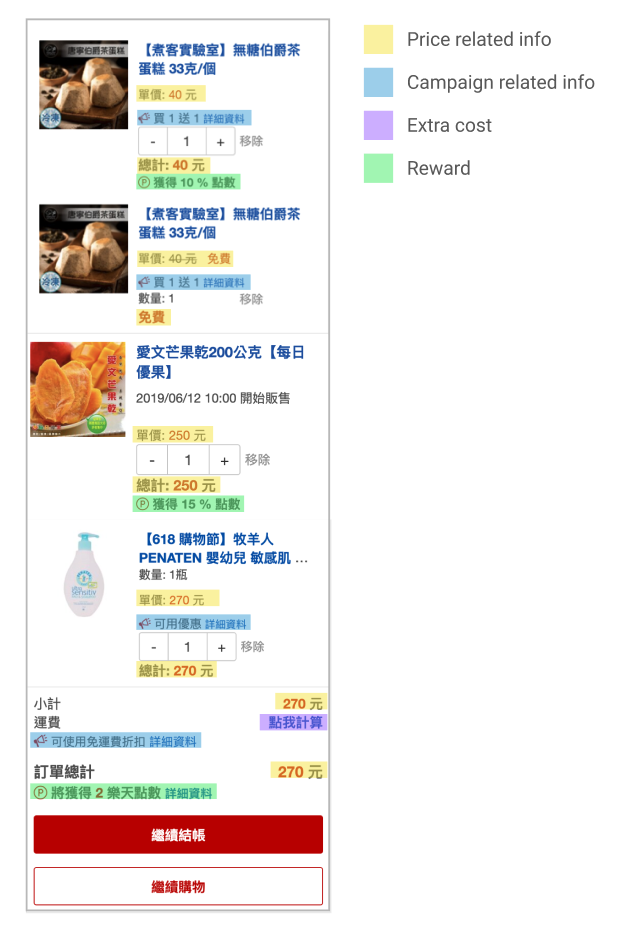
An analysis of information density, revealing cognitive overload on the Cart page.Optimizing the Path to Purchase Confidence
Design Enhancement One
Used campaign label to indicate the campaign info for product. Helped users to check applied campaign easier and make users aware of more campaign options to trigger more purchase.
Campaign label also worked as enter point to campaign content. The campaign content explain what campaign offer and expose more product to users.
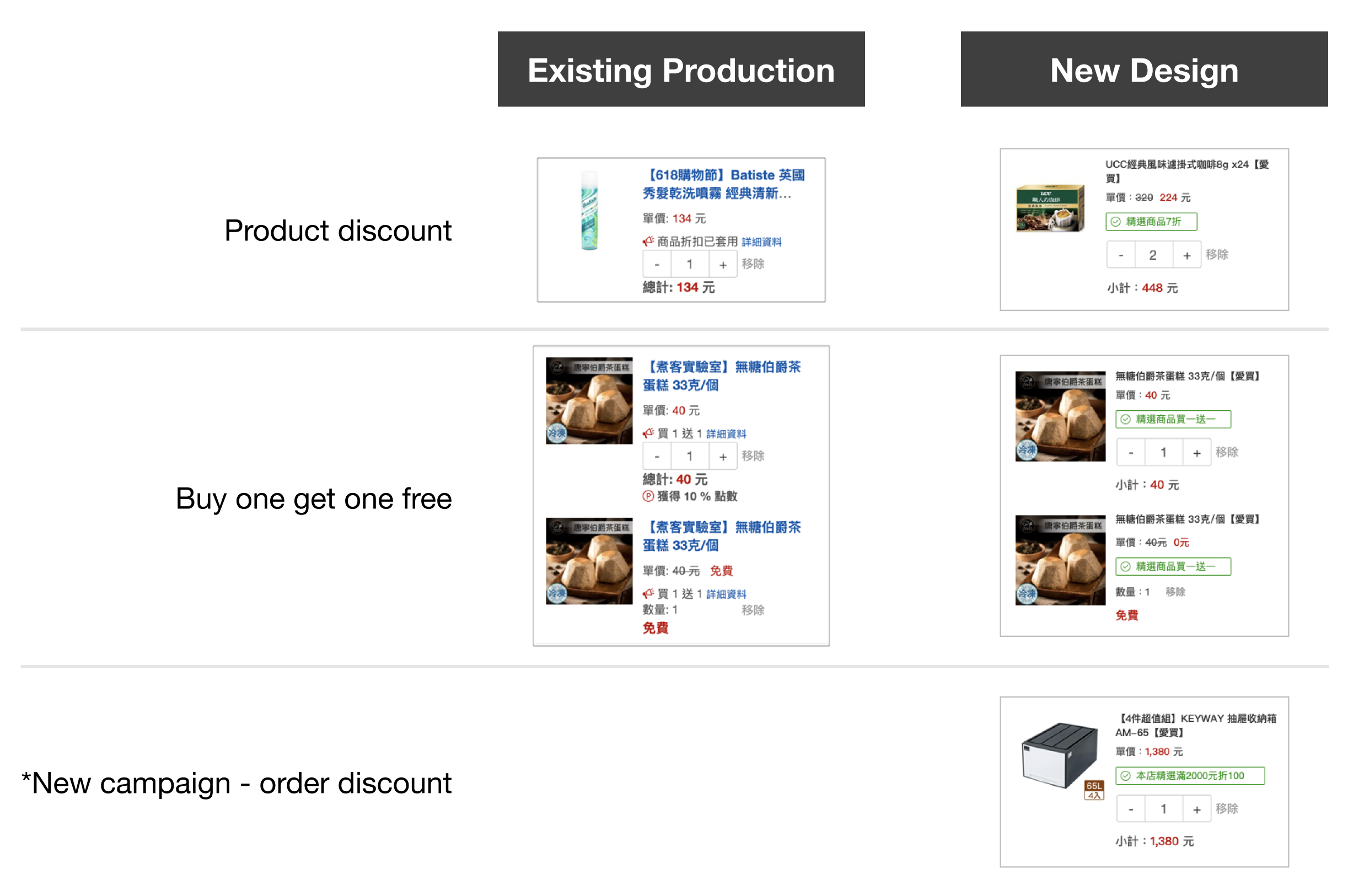
Comparison of existing product card and mid-fi design with distinct campaign labels.Design Enhancement Two
For shopping cart summary: summarize total discount and campaign applied to users and reduce the effort for calculating total discount manually.
For delivery summary: indicate applied campaign and shipping campaign to help users checking on campaign info.

New design summarized eligible campaigns within the shopping cart.Design Enhancement Three
Improved decision-making efficiency through a better-organized information layout, allowing users to verify orders with minimal effort.
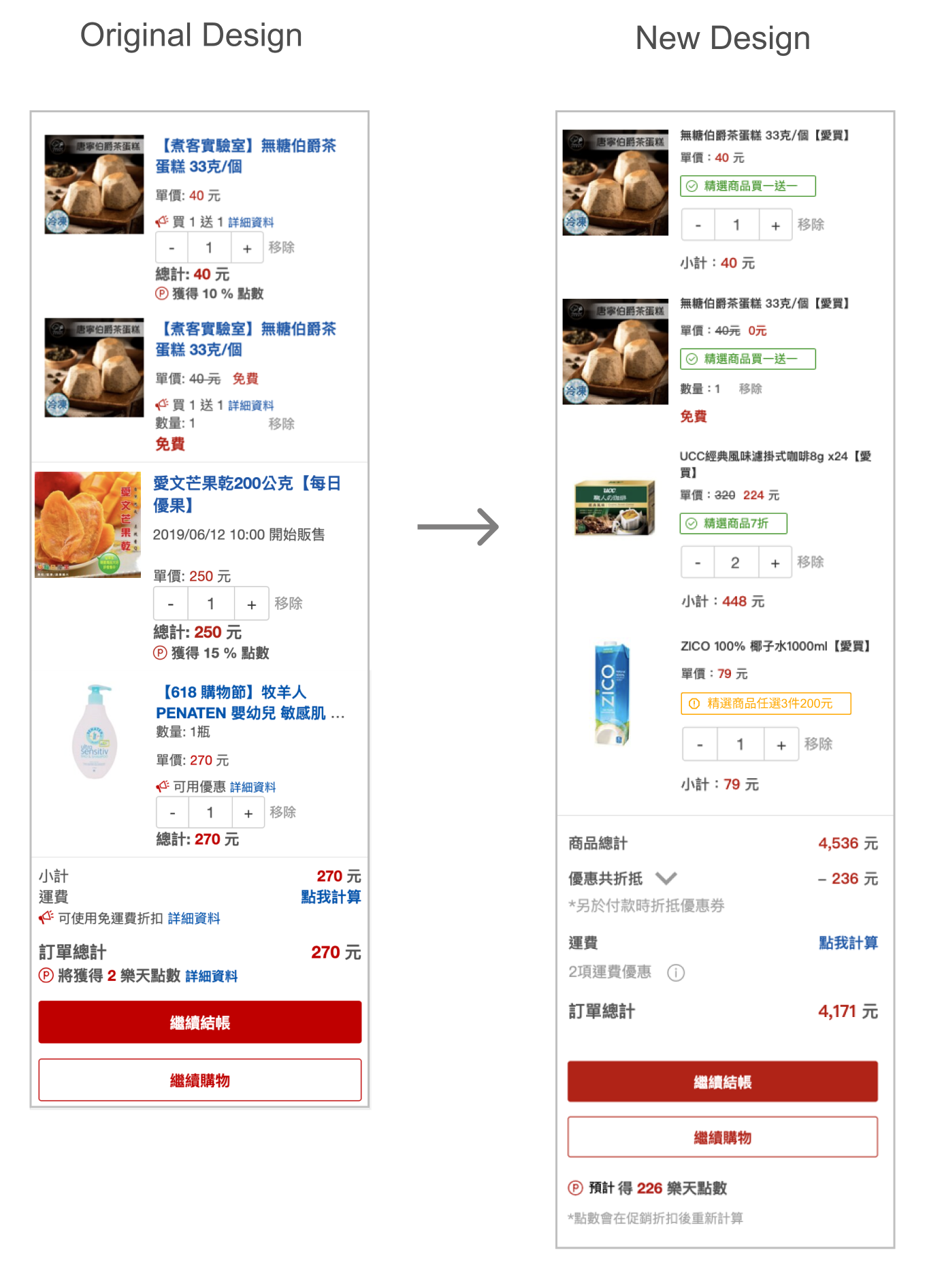
The mid-fi design emphasizing visual hierarchy for promotional and discount data.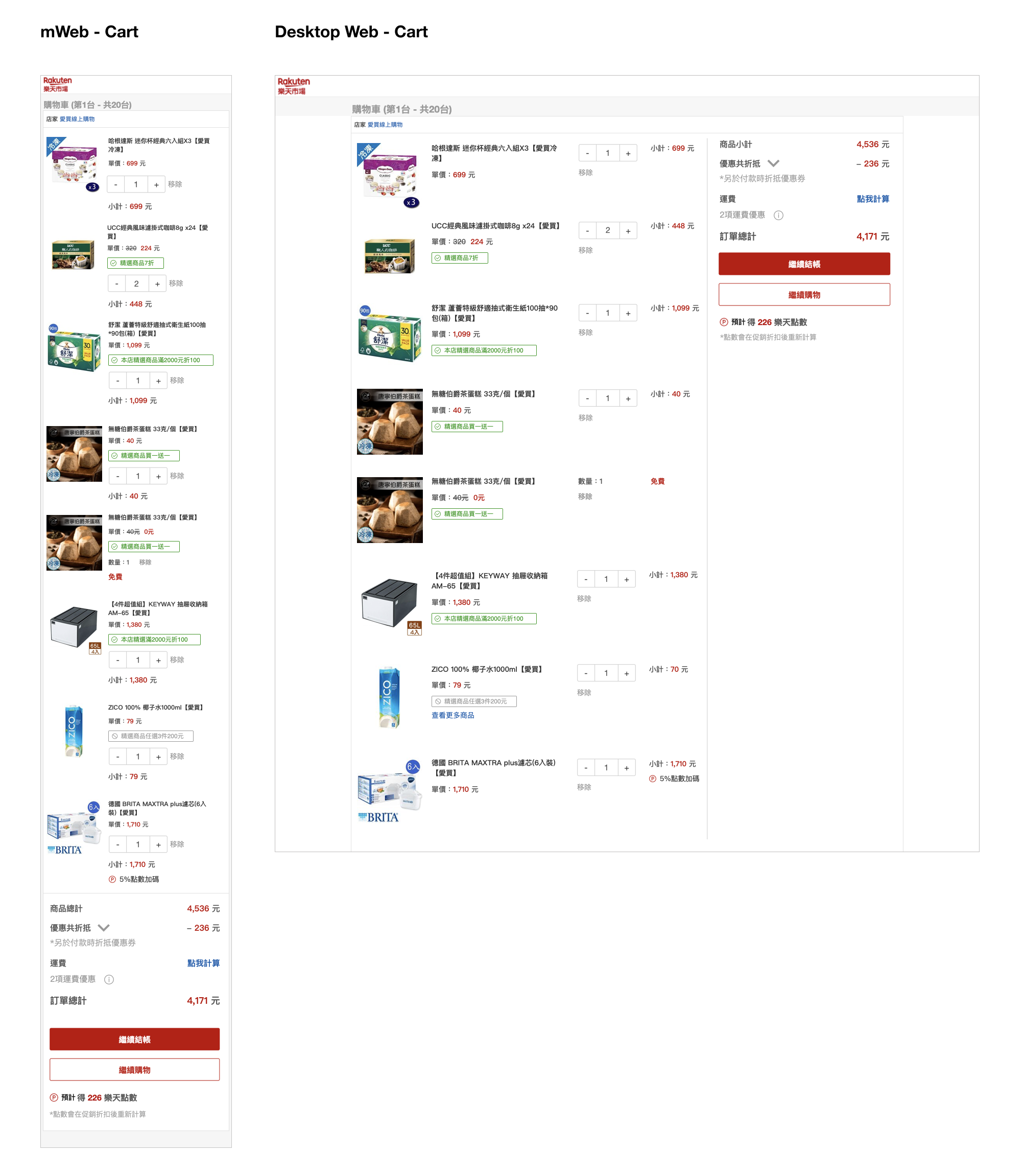
Responsive mid-fi design of shopping cart enhancement.Comparative Design Refinement
Comparing the original design with the new conversion-focused prototype. Annotations provide insight into the information audit and the subsequent re-prioritization of data within the shopping cart.
Original Cart Page
Scroll to explore
Tap to view analysis demo
New Cart Page Design
Scroll to explore
Tap 'discount label' or 'shipping campaign info'
Turn challenge into value together